
A Participant Experience System for Sustained Participation
How do the experiences young people have in our programs influence whether they continue to participate?
The Moment Before Dropout
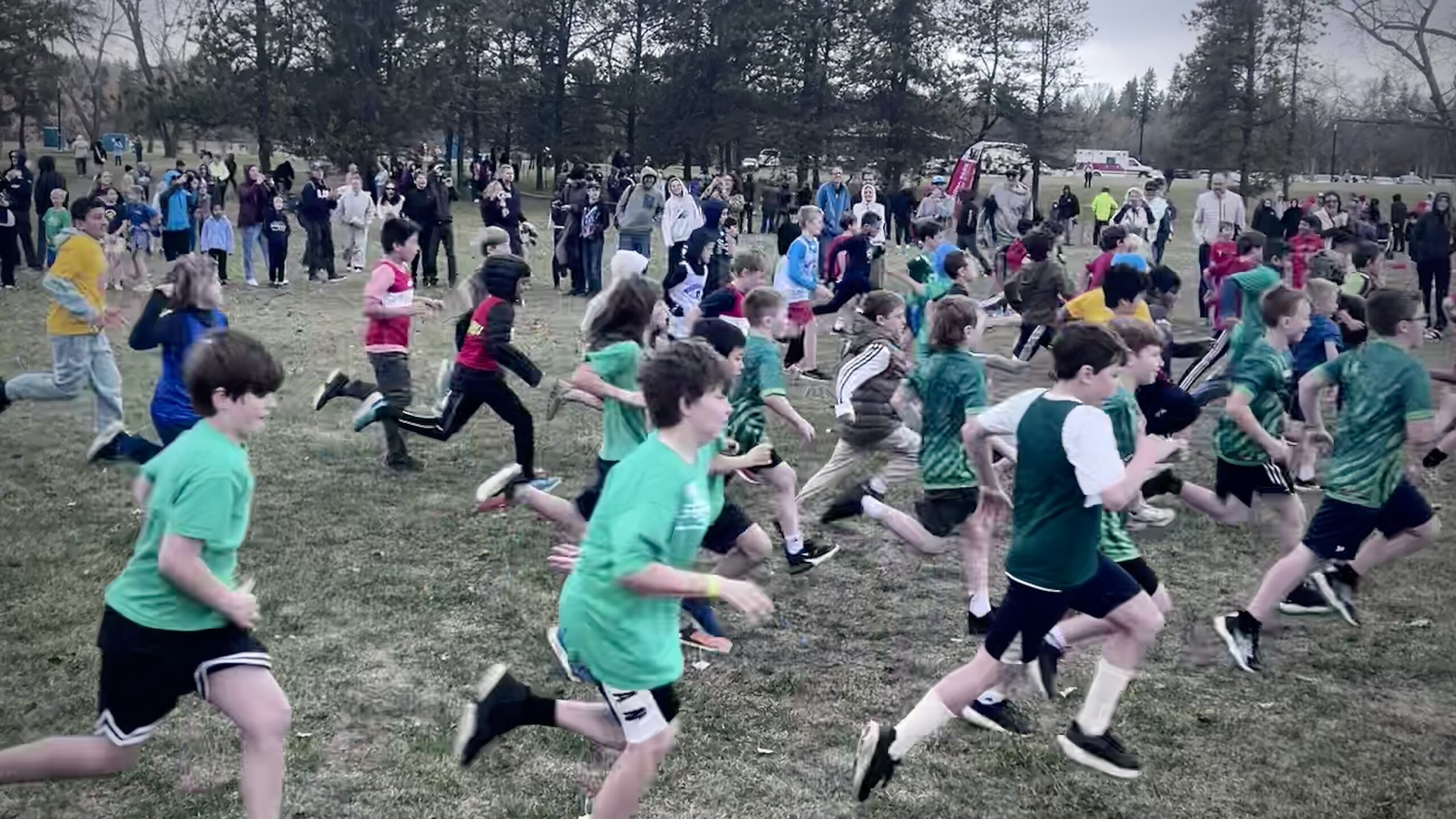
A child has been talking about his trail race all week. On race day, he freezes as the other kids sprint off the line. How are they so much faster than me?
Excited after making their first school volleyball team, two best friends walk into the gym together. By the end of the week, one is rotating through every drill and hearing her name called from the court. The other stands just off to the side, watching the game move faster than she can find her place in it.
At the provincial soccer championships, a girl stands on the sideline as her team takes the field. She shifts her weight, adjusts her crutches, and watches the game begin without her.
These moments may seem small. They often pass unnoticed by coaches, teachers, and parents. Yet they represent something much larger.
The struggle to keep young people engaged in sport and recreation is very real. We notice declining registrations, shorter participation spans, and programs that struggle to retain participants. But these are not always the underlying problems. They are visible symptoms of something deeper.
Why This Matters
In Canada, only 21% of youth aged 12 to 17 met recommended physical activity levels between 2022 and 2024. That’s roughly one in five teenagers. This represents a decline from 36% in 2018–2019, according to Statistics Canada’s Canadian Health Measures Survey.
These numbers are often framed as a health crisis. But long before they become a health issue, they are a participation issue.
For many young people, the decision to leave begins long before a registration form is left unfilled. It can begin with an experience.
A hesitation at the starting line. Standing just outside a practice drill. Watching from the sideline instead of stepping onto the field.
These moments are easy to miss. They rarely announce themselves. Yet over time, they accumulate. Not necessarily because young people no longer want to move, but because something in their experience tells them they do not belong, cannot succeed, or should not continue.
As coaches, educators, and sport leaders, we often respond by searching for a single cause and applying a single fix. A scheduling issue. A coaching issue. A motivation issue. Each may matter, but none exists in isolation.
Participation is rarely shaped by one moment or one factor. It is shaped by the system surrounding the participant.
So the real question is not simply, How do we get kids more active?
It is: What is happening inside our systems that is quietly pushing them away—and when does that process begin?
Why Youth Drop Out
Through research, observation, and experience in sport and recreation, we can identify patterns in the barriers young people encounter as they grow older. While these experiences vary between individuals and activities, some common themes tend to emerge.
Ages 10–12:
Skill gaps often begin to widen. Children become increasingly aware of how they compare to their peers.
Ages 13–15:
Sport often becomes more competitive. Puberty can temporarily disrupt coordination, strength, and confidence. At the same time, social belonging becomes increasingly important.
Ages 16–18:
Life expands. Academic demands, employment, social commitments, and future planning compete for time and energy. Practical barriers begin to weigh heavily.
These are not rigid timelines, but they reveal an important truth: dropout is usually a process, not an event.
And if dropout is a process, then participation must be understood as a system.
What Keeps Kids in Sports?
When we respond to declining participation with isolated fixes—a fee reduction, a new program, or increased marketing—we may solve one immediate problem. But isolated solutions rarely strengthen the system itself. As society, technology, and participant needs evolve, those quick fixes often fail to adapt.
Identifying why young people leave can seem straightforward. Responding effectively is far more complex. Our solutions are often limited by how narrowly we define the problem.
If dropout is a process, then retention must be one as well. Young people continue to participate when their experiences consistently send powerful messages:
- I belong here.
- I am improving.
- I am safe—physically, emotionally, and socially.
- This is worth returning to.
These signals are rarely shaped by a single moment. Instead, they develop through the accumulation of experiences over time. Each positive experience adds to a participant’s sense of connection, confidence, and commitment.
The question, then, is not simply how to prevent dropout. It is how to design systems that consistently create the experiences that keep participants engaged.
When programs intentionally support these signals, they do more than retain participants. They build environments where young people want to stay, grow, and invite others to join.
The Participant Experience System
Creating meaningful experiences does not begin with delivery—it begins with design. While many programs focus on what happens during a session, the outcomes we seek are shaped long before participants ever arrive.
When we rush to deliver without clear structure, we often undermine the very results we hope to achieve. A simple, intentional system allows us to focus on what matters most.
The Participant Experience System provides a way to understand how sustained participation is influenced through four connected stages:
Design → Delivery → Experience → Outcome
1. Design: Build for Participant Engagement
Participant engagement begins before the first session. Design determines the structure of the experience—how play is integrated, how skills progress, and how accessible the program is. It sets the foundation for everything that follows.
2. Delivery: The Human Element
Delivery brings the design to life. Coaches and instructors shape the environment through their communication, energy, and decision-making. Even the strongest design depends on effective delivery to succeed.
3. Experience: What Participants Actually Feel
This is where everything converges. It is here that participants begin to answer critical questions:
- Do I belong?
- Am I improving?
- Do I feel safe?
- Is this worth returning to?
4. Outcome: The Results of the Experiences
Sustained participation, increased registration, and skill development are not isolated results. They are outcomes influenced by repeated positive experiences. When systems consistently deliver meaningful experiences, continued participation becomes far more likely.
“I belong here. I am improving. I am safe. This is worth returning to.”
This system helps us understand how participation is shaped—but it also raises an important question:
What must these systems consistently deliver for participants to stay?
Five Drivers of Participation
To better understand what sustains engagement over time, we can examine five key drivers of participation. The stages describe how the system operates. The drivers help us understand what the system needs to support.
- Play and enjoyment are highly influential in creating positive experiences. Movement should feel like a reward.
- Perceived competence and progression address the participant’s need to feel capable and recognize their improvement.
- Belonging and connection strengthen the relationships that anchor participants to their activities. Relationships often become the reason participants return.
- Accessibility and adaptability require us to recognize and reduce barriers to participation. Our programs must fit real life.
- Learning-focused environments prioritize growth, learning, and support for participation. Participants’ experiences should not depend on having one great coach. A learning-focused culture requires the entire staff to contribute to an environment where participants’ needs are recognized and supported.
These five drivers of participation identify key areas that systems should intentionally support. Not every driver will require the same level of focus in every program or situation. Understanding their role allows us to assess where our systems are succeeding, where they may be falling short, and how we can continue improving the experiences we create.
Key Takeaways
Designing for sustained participation in sport and recreation requires a systems approach. Sustained participation depends on the conditions people experience—not just the opportunities provided.
The Participant Experience System follows four connected stages:
- Design – We must intentionally build for what we desire.
- Delivery – Even the strongest design depends on effective delivery to succeed.
- Experience – The collection of key moments shapes how participants feel about a program.
- Outcome – Positive experiences influence what happens next.
To guide us through these stages, we use five drivers of participation:
- Play and enjoyment – Movement should feel like a reward.
- Perceived competence and progression – Participants need to feel capable and recognize their improvement.
- Belonging and connection – Relationships anchor participants to their activities.
- Accessibility and adaptability – Our programs must fit real life.
- Learning-focused environments – Our cultures prioritize growth, learning, and support for participation.
Together, these stages and drivers help us examine the conditions needed to create meaningful experiences and support sustained participation.
Continuing the Conversation
In the upcoming series, we will explore the Participant Experience System, its four stages, and each of the five drivers of participation.
Bookmark this page, follow Inspiring Athletics on Facebook, Instagram, and Threads (@inspiring_athletics_ab), and sign up for our newsletter to keep up with new articles and updates.
If we want lifelong participation, we must intentionally design experiences that people want to return to. Participation is not sustained by chance, but by the systems, relationships, and environments that shape how people feel when they move, play, and belong.
Research and Influences
This system is informed by participation research, coaching science, systems thinking, game-based learning, and athlete development literature, including concepts explored through Sport for Life, LTAD models, and youth sport participation studies.
Participant Experience System Note
The Participant Experience System brings together ideas from sport and exercise science literature, participation research, game-based learning, and systems thinking. It is shaped by my experience in sport and recreation settings and applied as a practical system to design, deliver, and evaluate participant experiences.